
EMDR Therapy · Oakland
EMDR therapy
for Oakland.
What you're carrying isn't always one thing. It's the accumulation of what you've had to absorb, adapt around, or keep walking through. Talk therapy has named some of it, and your nervous system still runs hot, still braces, still doesn't quite trust. EMDR works the memory at the level it was stored, not the level you've already talked about it at. We work with Oakland clients via secure telehealth.
EMDR is offered via secure telehealth across California with Jalyse Stewart, AMFT #153712 (supervised by Christina Mathieson, LMFT #115093).
Who we see in Oakland
Functional on the outside. Stuck on the inside.
The Oakland clients who come to us for EMDR aren't in chaos. Many of them are running full lives: jobs, kids, caregiving, commutes, the schedule-juggling that doesn't let up, work that asks more than any one person should give. There's just a part of them that hasn't been able to move on from something: a specific incident, a cumulative weight, a childhood that shaped how your nervous system reads every room, a betrayal that talk therapy has named but not quite reached.
The pattern: you can describe what happened, you can name what it cost you, you can sometimes laugh about it, and there's still a panic that flares when something brushes too close. The nervous system is still running an old program, and EMDR is one of the most well-researched ways to update that program.
We work with single-event trauma, complex and developmental trauma (CPTSD), medical trauma, birth trauma, accident trauma, sexual trauma, racial trauma, and the cumulative weight of high-functioning lives held together by a tight nervous system. EMDR research overview from EMDRIA.
How EMDR actually goes
Eight phases. No retelling.
EMDR isn't a single session of "doing the thing." It's an eight-phase protocol: history-taking, preparation, assessment, desensitization, installation, body scan, closure, and re-evaluation. The first few sessions are about building the resourcing you need to do the active reprocessing safely. Then we get into it.
During the active phases, you bring up a target memory while focusing on bilateral stimulation (typically guided eye movements, but tapping or audio tones work too, and all of these can be done over video). You don't narrate the memory. You notice what comes up. The brain reprocesses, the somatic charge settles. Most clients are surprised by how little talking is involved.
Between sessions, your nervous system continues to integrate. We check in regularly about what's shifting, what's still active, and whether to keep targeting the same memory or move to the next.
Who you'd work with
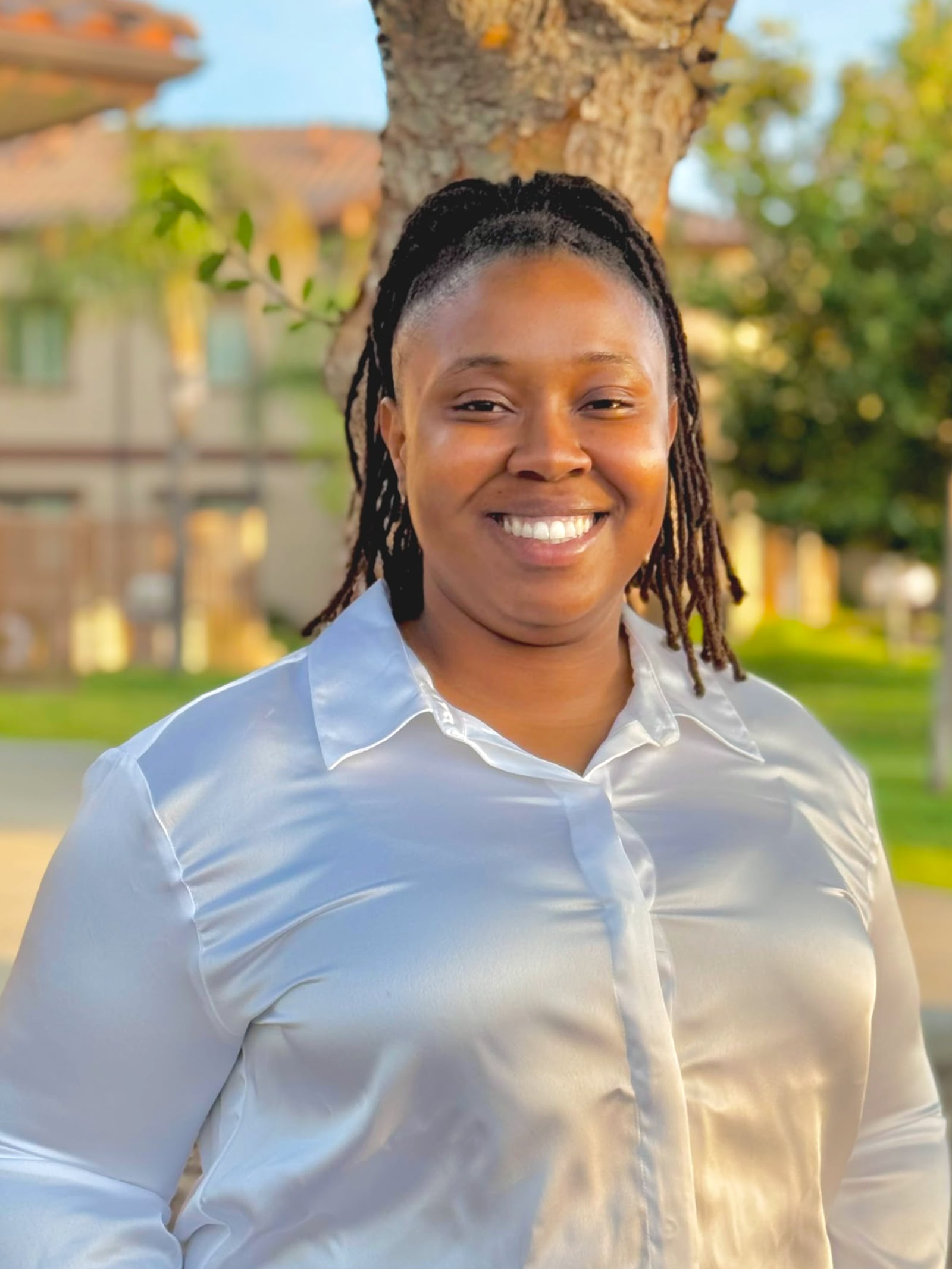
Jalyse Stewart leads our EMDR work.
Registered Associate Marriage and Family Therapist (AMFT) #153712
Supervised by Christina Mathieson, LMFT #115093
Jalyse is our trauma-trained clinician. EMDR-focused and IFS-informed, with somatic practices and CBT in the toolkit. She brings specific care to women and BIPOC clients carrying childhood trauma, complex trauma, and the kind of nervous-system load that has been adapted to over a lifetime. She works via secure telehealth with clients across California, including Oakland and the East Bay.
Read Jalyse's full bioFAQ
Common questions about EMDR.
Does EMDR work over telehealth?
+
Yes. Telehealth EMDR is now well-supported by research and recognized by the EMDR International Association as an effective format. The bilateral stimulation that's core to EMDR is delivered through guided eye movements, tapping, or audio tones that work just as well on screen. For most Oakland clients, video makes EMDR more accessible, not less.
How is EMDR different from regular talk therapy?
+
Talk therapy works with the story of what happened: what it means, how you make sense of it, what you tell yourself about it. EMDR works with how that memory is stored in the nervous system. You don't have to retell the trauma in detail. The brain reprocesses it while you focus on bilateral stimulation, and the somatic charge (the body's 'this is happening now' alarm) settles. Many clients describe it as something finally moving when nothing was moving before.
How many EMDR sessions will I need?
+
It depends on what we're working with. A single-incident trauma (a car accident, a medical event, a specific assault) often resolves in 6 to 12 sessions of active reprocessing, plus a few preparation and integration sessions on either side. Complex or developmental trauma (childhood abuse, layered relational injuries, CPTSD) takes longer because there are more layers to work through. We'll talk about a realistic timeline at intake.
Can EMDR help with racial trauma and identity-based stress?
+
Yes. For BIPOC clients, the trauma work often carries the additional weight of racialized experience. The nervous system remembers that too. Jalyse Stewart, AMFT #153712 (supervised by Christina Mathieson, LMFT #115093), brings specific care to this work, alongside EMDR for single-event trauma, complex trauma, and the cumulative weight of lived experience inside systems that still have not caught up.
Will I have to relive the trauma during EMDR?
+
No. This is one of the biggest misconceptions about EMDR. You bring up the memory enough to activate it, but you don't talk through it in detail or stay in the worst of it. The therapist's job is to keep you in your window of tolerance: present, regulated, and able to step out anytime. The reprocessing happens between you and your own brain. We just create conditions for it.
What if I've already done a lot of therapy and haven't moved past this?
+
Common reason people come to EMDR. Talk therapy works on the story and meaning of what happened. EMDR works on how the memory is stored in the nervous system. Those are different layers, and one can be done without moving the other. Many of our Oakland clients have excellent talk therapists, understand their story in depth, and still have a body that hasn't gotten the message. EMDR works that body-level layer specifically.
References & further reading
- EMDRIA — EMDR research overview — EMDR International Association
- The Body Keeps the Score — Bessel van der Kolk, MD — Bessel van der Kolk, MD
- No Bad Parts — Richard C. Schwartz, PhD (IFS) — Richard C. Schwartz, PhD / IFS Institute
- APA Clinical Practice Guideline for the Treatment of PTSD — American Psychological Association

Ready to start moving what's been stuck?
Free 15-minute call. We'll talk about what you're carrying, whether EMDR is the right fit, and what a realistic course of treatment would look like.
Book a Free Consult