
For a nervous system running too hot
Anxiety therapy for when your body keeps sounding alarms your mind can't shut off.
Reviewed by Christina Mathieson, LMFT · June 2026
Evidence-based therapy for generalized anxiety, panic, social anxiety, and OCD patterns: CBT, ERP, ACT, and mindfulness integrated into a plan that fits your life. Online, anywhere in California.
If this sounds like you
- You're waking up with a body that's already tense before the day starts
- Panic attacks show up without a clear trigger and leave you bracing
- Worry cycles eat hours about health, money, relationships, random futures
TL;DR
If your nervous system is on high alert before the day even starts, if you wake up bracing, if your body sounds alarms your mind can't shut off, the work is calming the system, not winning an argument with the worry. We use CBT for the thought patterns, ACT for shifting your relationship to anxious thoughts rather than fighting them, ERP for OCD and avoidance loops, and mindfulness for nervous-system regulation. A typical course of focused anxiety work runs around 8 to 15 sessions. The goal is anxiety that no longer rules your life, not anxiety at zero. Michelle Cortez leads our anxiety and OCD work and uses EFT-informed approaches plus ERP for the anxious-pattern layer specifically.
Good fit if
- You're waking up with a body that's already tense before the day starts
- Panic attacks show up without a clear trigger and leave you bracing
- Worry cycles eat hours about health, money, relationships, random futures
- You avoid things that would actually be fine (conversations, commitments, decisions)
- Intrusive thoughts or compulsions are controlling more of your day than you want
Not a fit if
- Untreated panic with medical factors (heart, thyroid) that haven't been ruled out, see a physician first
- Severe OCD that needs intensive, multi-hour weekly ERP, we'll refer to a specialty clinic
Not sure which column you're in? Book a free consult. If we're not the right fit, we'll help you find someone who is.
What the work looks like
How we actually work together.
We start by mapping your anxiety: triggers, avoidance patterns, the thought–feeling–behavior loops that keep it running. Most of the work follows from understanding how your specific version operates. (For one common variation we see often, anxiety hidden behind high performance and the appearance of having it all together, see our piece on high-functioning anxiety.)
From there, we use CBT to interrupt thought patterns, ACT to shift your relationship to anxious thoughts rather than fighting them, and Exposure and Response Prevention (ERP) when compulsions or avoidance are reinforcing the loop. Mindfulness practices build a steadier baseline between sessions.
Anxiety rarely goes to zero, and that's not the goal. The goal is for anxiety to stop ruling your life. We see anxiety and OCD clients online anywhere in California, with evening and weekend availability.
Modalities we draw from
 Which kind of anxiety you're dealing with shapes what actually helps
Anxiety isn't one thing. The mental checklist-running that won't shut off is different from the panic attack that lands without warning, which is different from the social dread that hits before a meeting, which is different from the OCD loop that keeps demanding the same checking behavior. Each has its own mechanism and its own most-direct intervention. Most clients arrive knowing they're anxious; the first useful thing therapy does is help you see exactly which kind of anxiety it is.
Clinically, anxiety is the nervous system's threat-detection doing its job, sometimes too well and sometimes about the wrong things. It becomes a disorder when it persists in the absence of real threat, intensifies disproportionately to the trigger, or interferes with daily functioning. According to the National Institute of Mental Health, about 19 percent of U.S. adults had an anxiety disorder in the past year, and the World Health Organization calls anxiety disorders the most common of all mental disorders. Lifetime prevalence is closer to 31 percent.
The DSM-5-TR distinguishes several specific anxiety presentations, and the treatment approach depends on which one is showing up. Generalized anxiety disorder (GAD) is the persistent, free-floating worry pattern: hours of mental checklist-running about health, money, relationships, futures that may or may not arrive. Panic disorder is recurrent panic attacks plus the anticipatory dread of the next one. Social anxiety disorder is anxiety specifically around perceived judgment in social or performance contexts. Specific phobias are concentrated fear responses to particular triggers. And OCD, while now classified separately from anxiety disorders, shares enough mechanism that it's typically treated by anxiety-trained clinicians.
What we see clinically often spans these categories. A client may have GAD as the baseline with social-anxiety amplification at work, or panic disorder layered with health anxiety, or OCD-adjacent intrusive thoughts running alongside generalized worry. The labels matter for treatment selection but the work is on the actual pattern in front of us, not the label on the chart.
There's also the broader category of high-functioning anxiety, which doesn't have a formal DSM entry but describes a pattern many of our clients fit: chronic, often subclinical-by-classical-criteria anxiety that hides behind achievement, productivity, and the appearance of having it all together. The internal experience is real even when the external presentation looks fine. We treat it the same way we treat formally-diagnosable GAD, because in our experience it responds to the same tools.
Evidence-based anxiety treatment, by mechanism
The four approaches we use most for anxiety are CBT, ACT, ERP, and mindfulness-based approaches, each working on a different mechanism.
CBT targets the cognitive layer. The core move is examining automatic thoughts that fuel anxious reactions, testing them against actual evidence, and developing more accurate alternative interpretations. CBT for anxiety includes specific techniques like cognitive restructuring, behavioral experiments, and structured worry exposure. It's typically time-limited (12 to 20 sessions) with between-session homework that does most of the consolidation work. The evidence base is unusually strong: dozens of randomized controlled trials show effect sizes in the range of medication or higher, with longer-lasting effects.
ACT comes at anxiety from the opposite angle. Instead of arguing with anxious thoughts, ACT helps you defuse from them and commit to values-aligned action even while the anxiety is present. ACT often lands well with clients who've done CBT before and felt frustrated that arguing with anxious thoughts didn't make them stop arriving. The dialectic in ACT (let the thoughts be what they are AND choose what you do anyway) is often what unsticks the work for those clients.
Exposure and Response Prevention (ERP) is the gold-standard treatment for OCD and is also used for specific phobias and severe avoidance patterns. The work involves gradually engaging with anxiety-triggering stimuli without performing the compulsive or avoidance behavior, on the principle that the nervous system updates its threat predictions based on what actually happens, not on what it fears will happen. ERP is more demanding than CBT or ACT in the short term, but for OCD specifically it's typically the fastest path through.
Mindfulness-based approaches target the somatic and attentional layers. Practices like body scans, breath-anchored attention, and the MBSR (Mindfulness-Based Stress Reduction) protocol developed by Jon Kabat-Zinn directly regulate the autonomic nervous system through repeated attentional training. For clients whose anxiety lives strongly in the body (chronic muscle tension, jaw clenching, gut symptoms, sleep disruption), mindfulness work often does more than cognitive work alone.
When medication fits alongside anxiety therapy
We don't prescribe medication; we're therapists, not psychiatrists. For many anxiety presentations, therapy alone is sufficient and produces durable results. For some presentations, the combination of therapy plus medication can be more effective than either alone, particularly for severe presentations and for clients whose symptom load makes engaging in therapy difficult without pharmacological support.
When medication is part of the picture, we can coordinate with your prescriber when a release is signed and it would benefit the work. SSRIs (selective serotonin reuptake inhibitors) and SNRIs (serotonin-norepinephrine reuptake inhibitors) are the most commonly prescribed first-line medications for anxiety, with effect sizes comparable to therapy. Benzodiazepines (Xanax, Klonopin, Ativan) are sometimes used short-term but carry tolerance and dependence risks for ongoing use, and most current prescribing practice treats them as bridges rather than long-term solutions.
If you don't have a psychiatrist, your primary care physician can prescribe SSRIs for anxiety in many cases, though a psychiatric specialist is usually a better fit if your situation is complex or if you've tried medications before without success. We refer to several psychiatrists and psychiatric nurse practitioners across California and can suggest names if helpful.
Starting medication is not a sign that therapy isn't working or that your anxiety is too severe. It's one tool among several. Some clients use medication for a defined window during the most active phase of therapy and taper afterward. Others find ongoing low-dose medication helpful as a steady-state foundation that makes the rest of the work possible. Both are valid and both are common.
Take-home handouts
Tools to practice between sessions.
Free, printable worksheets that pair with this work, the same material we use in the room.
Window of Tolerance Worksheet
Map your nervous-system states and widen the zone where you stay regulated.
Boundaries vs. Selfishness
Tell a boundary from a selfish ask, across six relationship contexts.
Clear Is Kind
How to say a boundary so it lands, built on Brené Brown's 'clear is kind.' Before/after rewrites, a fill-in, and a reflection prompt.
Holding the Line
For the moment after a boundary gets tested: consequence vs. punishment, turning a request into a boundary about yourself, how to live with caring while your partner doesn't do it, keeping resentment from weaponizing it, scripts, and a follow-through planner.
Bending, Not Breaking
An ACT toolkit for resilience from Russ Harris and Steven Hayes: dropping anchor, defusion, expansion, self-compassion, and values work, with sections on staying steady through change and examples for job loss, caregiving, and the fear of aging.

Wondering if we're the right fit for what you're working on?
Free 15-minute call. We'll figure out together if we're the right starting point.
Book a Free ConsultWondering about cost? See what therapy costs in California.
New to seeing a therapist online? How online therapy works.
Who on our team does this work
2 therapists who specialize here.

Michelle Cortez
Registered Associate Marriage and Family Therapist (AMFT) #146795
Supervised by Christina Mathieson, LMFT #115093
If therapy has felt too slow or too surface-level, that is exactly what I work against. Couples stuck in attachment patterns, anxiety and OCD, and neurodivergent clients who need structure and real feedback.
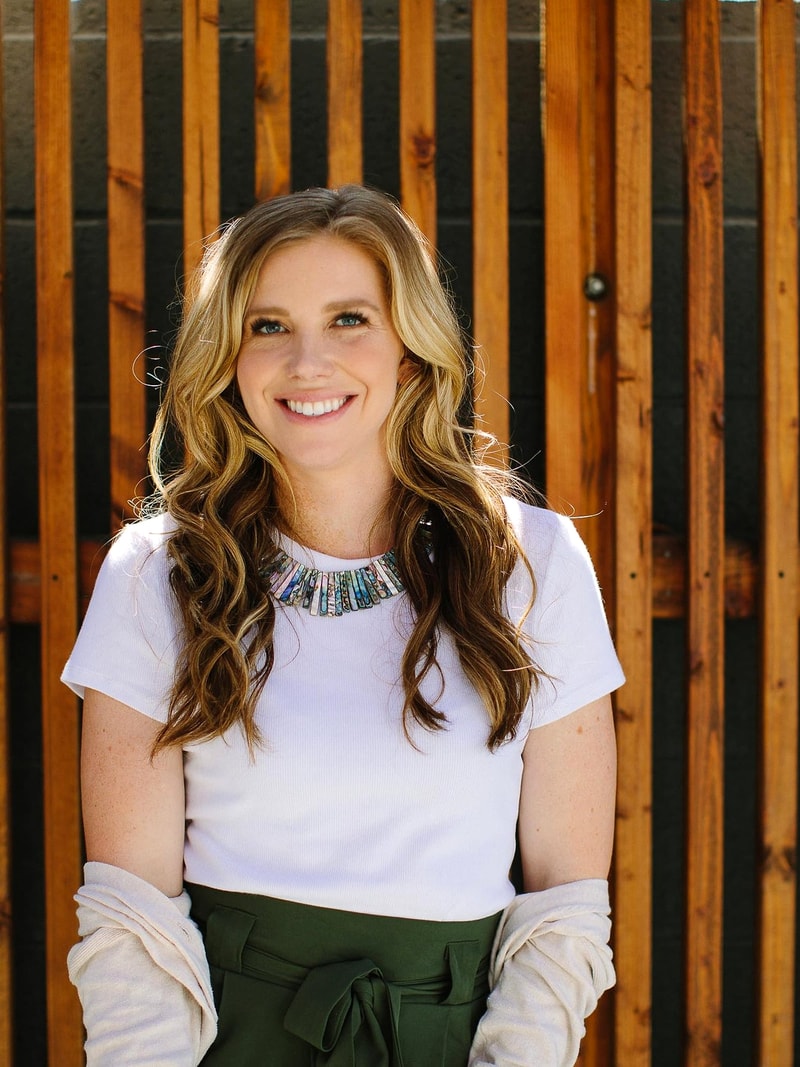
Christina Mathieson
Licensed Marriage and Family Therapist (LMFT) #115093
Human sexuality, couples work, ADHD and neurodiversity-affirming therapy, and affirming care for individuals navigating relationships, identity, and life transitions.
FAQ
Common questions about anxiety therapy.
Can therapy really help if my anxiety feels physical?
+
Yes. Anxiety lives in the body; most good anxiety therapy addresses both the cognitive and somatic components. CBT shifts thought patterns; somatic and mindfulness practices directly regulate the nervous system.
Do you prescribe medication for anxiety?
+
No. We're therapists, not prescribers. Therapy alone is highly effective for most anxiety conditions. If medication would help, we'll refer to a psychiatrist or psychiatric NP and coordinate alongside.
What's the difference between CBT and ACT for anxiety?
+
CBT works to change anxious thoughts and behaviors directly. ACT accepts the presence of anxious thoughts and focuses on what you want your life to be about regardless. We use both, matched to the client. Some people respond better to one than the other.
How long does anxiety therapy take?
+
Focused anxiety work is typically a course of around 8 to 15 sessions. More complex or long-standing anxiety (decades-old patterns, OCD, trauma-driven anxiety) takes longer. We'll share a realistic estimate after intake.
Who on your team specializes in anxiety?
+
Michelle Cortez is the clinician on our team who works most closely with anxiety, including high-functioning anxiety, generalized anxiety, and OCD patterns, using CBT, ACT, ERP, and narrative therapy. Christina also works with anxiety in her practice.
References & further reading
- Hofmann et al. (2012), The efficacy of cognitive behavioral therapy: A review of meta-analyses, Cognitive Therapy and Research, Peer-reviewed research
- Bandelow, Michaelis & Wedekind (2017), Treatment of anxiety disorders, Dialogues in Clinical Neuroscience, Peer-reviewed research
- Hofmann, Sawyer, Witt & Oh (2010), The effect of mindfulness-based therapy on anxiety and depression: A meta-analytic review, Journal of Consulting and Clinical Psychology, Peer-reviewed research
- NIMH: Anxiety Disorders, National Institute of Mental Health
- APA: Anxiety, American Psychological Association
- International OCD Foundation, Exposure and Response Prevention (ERP), IOCDF
- WHO, Anxiety disorders fact sheet, World Health Organization
- MedlinePlus, Anxiety, MedlinePlus / U.S. National Library of Medicine
- The Happiness Trap by Russ Harris (ACT-based book), Russ Harris, MD
- The Gifts of Imperfection, Brené Brown, Brené Brown
- Self-Compassion by Kristin Neff, PhD, Kristin Neff, PhD
- The Mindful Self-Compassion Workbook by Kristin Neff, PhD & Christopher Germer, PhD, Kristin Neff, PhD & Christopher Germer, PhD
- Your body language may shape who you are by Amy Cuddy (TED), TED
- The Willpower Instinct by Kelly McGonigal, PhD (Talks at Google), Kelly McGonigal, PhD
- Burnout, Emily & Amelia Nagoski (stress cycle and the body), Emily Nagoski, PhD & Amelia Nagoski
- Hidden Brain (podcast) by Shankar Vedantam, Hidden Brain Media
- On Purpose with Jay Shetty (podcast), Jay Shetty
- I Thought It Was Just Me (But It Isn't), Brené Brown, Brené Brown
Last clinically reviewed: June 26, 2026 by Christina Mathieson, LMFT.

Free monthly workshop
Grief Doesn't Stop the Clock: Healing While Life Goes On
Wednesday, October 28, 2026 · 8:00 PM PT · Zoom · Free
Related
Trauma Therapy
Trauma therapy across trauma-focused CBT, IFS, systemic family work, narrative therapy, ACT, DBT, and somatic practices, matched to the framework that fits your situation.
Learn moreIndividual Therapy
One-on-one therapy for anxiety, depression, identity, trauma, and the patterns you can see but can't yet shift.
Learn moreADHD and Neurodiversity-Affirming Therapy
Neurodivergent-affirming therapy for adult ADHD: focus, executive function, emotional regulation, RSD, and self-compassion.
Learn moreReady to talk it through?
Free 15-minute call. We'll figure out if anxiety therapy is the right work for where you are, and match you with the right person on our team.
Book a Free ConsultPrivate pay, with out-of-network and sliding-scale options. See how billing works.