
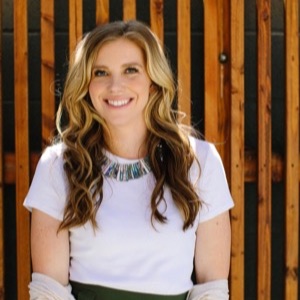
By Christina Mathieson, LMFT #115093, founder of My Mental Climb. Christina completed the Buehler Institute Comprehensive Sexology Program and leads the practice's sex therapy work.
TL;DR. CBT is a strong fit for sexual anxiety because the anxious thought-behavior cycle that drives it is the exact kind of pattern CBT was built to interrupt. Most clients working on isolated sexual anxiety see meaningful change in 8 to 12 sessions of structured CBT combined with sex-therapy-specific frameworks like sensate focus. When trauma or relational dynamics are underneath the anxiety, CBT usually gets paired with EMDR or couples work rather than used alone.
What surprises many new sex therapy clients is how quickly things move once we target the specific cognitive and behavioral loop keeping the anxiety in place. More information about sex, better technique, and specific medications all have a role to play in their own right, but they rarely resolve the anxiety pattern on their own without the CBT layer that targets the loop directly.
This post walks through what sexual anxiety actually is, what CBT for sexual anxiety looks like in practice, when it needs to be paired with other approaches, and how to think about the timeline.
What sexual anxiety actually is
Sexual anxiety is a persistent apprehension or dread around sexual encounter that starts to shape behavior. It shows up in a few recognizable patterns, and most clients recognize themselves in one or more:
- Anticipatory anxiety. Worry that starts hours or days before a planned sexual encounter and escalates as the encounter gets closer. Often includes catastrophic mental rehearsal of what could go wrong.
- Spectatoring during sex. Being mentally outside of the experience while it is happening, monitoring your own body, your partner's reactions, or the imagined judgment of both. Coined by Masters and Johnson, spectatoring is well-established as a primary cognitive mechanism underneath many sexual difficulties.
- Avoidance. Beginning to structure your life so sexual encounters are less likely: staying up later than your partner, initiating conflict before bed, dressing so intimacy feels less accessible. Often unconscious at first.
- Post-encounter rumination. Replaying what happened afterward, cataloging what went wrong, apologizing internally or externally, sometimes dissociating from what actually was good about the encounter.
The specific presentations differ, but the underlying mechanism is fairly consistent. A thought about performance or judgment activates anxiety, the anxiety interferes with arousal or presence, the interference confirms the original fear, and the loop reinforces itself. This is the exact structure CBT was designed to interrupt.
The mechanism has a useful parallel: arousal behaves a lot like sleep. You can't will yourself to fall asleep, and the harder you try, the more awake you get, because the trying is its own kind of alertness. Sleep comes when you stop demanding it and the conditions are right. Arousal is governed by the same branch of the nervous system, the part that has to feel safe enough to let go, so pushing harder for it backfires the same way pushing harder for sleep does. Much of CBT for sexual anxiety is, in effect, doing for arousal what sleep hygiene does for rest: building the conditions and removing the demand instead of forcing the outcome.
Why alcohol usually makes it worse
The most common thing people try before therapy is a drink or two before sex to take the edge off. It usually helps once, sometimes twice, and then starts backfiring in ways that deepen the original loop.
The short-term relief is genuine: alcohol is a central nervous system depressant, so anticipatory anxiety drops with the first drink. What is harder to notice is what alcohol simultaneously does to the physiology sex depends on.
Erection responds badly to higher doses. Acute higher-dose intake reliably reduces penile blood flow and rigidity, and chronic heavy use damages the vascular and hormonal systems erection depends on over time. The Journal of Sexual Medicine has documented the dose-response relationship for decades. The colloquial term "whiskey dick" refers to a well-mapped physiological effect.
Interoception dulls. Interoception is the felt sense of what your body is doing internally, the signal of arousal and building pleasure. Alcohol reduces interoceptive accuracy, which is exactly the awareness sex therapy is trying to rebuild. Anxiety fades, and so does most of what the body was going to notice.
Attention narrows onto whatever is most salient. The alcohol myopia framework (Steele and Josephs, 1990) shows that alcohol narrows attention onto whatever cue is most salient in the moment. When the salient cue is "I need to perform," the performance focus tends to intensify.
Each encounter starts with more anxiety than the last. When alcohol-assisted sex goes badly (soft erection, delayed orgasm, dissociation, a shame spike afterward), the brain codes it as another data point that sex is unsafe. Anticipatory anxiety climbs before the next encounter, the pull toward a drink strengthens, and the association reinforces itself.
Cannabis and benzodiazepines show similar patterns in clinical practice: they reduce anticipatory anxiety at the cost of the interoceptive awareness that arousal and pleasure depend on. The short-term relief tends to build a longer-term dependence that displaces the underlying anxiety without addressing it.
CBT for sexual anxiety usually includes an honest look at what a person is currently using to manage the anxiety, without shame or a demand that use stop before therapy begins. Substance use often eases naturally as the anxiety loop shifts, because the pull to self-medicate weakens when the pattern the substance was managing is no longer as active.
Why CBT is a good fit
CBT works on the cognitive-behavioral loop directly. In sexual anxiety specifically, three interventions carry most of the change.
Identifying the specific catastrophic beliefs. Most sexual anxiety comes down to one or two core beliefs, and they are usually much more specific than "I have anxiety about sex." Common examples: "If I lose my erection once, my partner will lose interest in me." "My arousal difficulty is proof that something is fundamentally wrong with me." "My partner is going to compare me to their past partners and find me lacking." "If I do not want sex as often as they do, the relationship is going to end." The first move in CBT is bringing those specific beliefs into the room where they can be examined instead of shaping behavior out of sight.
Testing the beliefs against actual evidence. Once the specific belief is on the table, we look at what evidence supports it, what evidence contradicts it, and what the belief is doing to the person's behavior in the meantime. The goal is to notice that the belief is being treated as certainly true when the evidence usually shows it is one possible reading among several, while still respecting that the underlying fear is real and worth attending to.
Behavioral experiments that rebuild positive associations. CBT is not only a thinking intervention. The behavioral piece pairs the cognitive work with structured, graduated experiences that let the client accumulate new evidence about what actually happens. In sexual anxiety, this often looks like sensate focus exercises adapted from Masters and Johnson, where the couple engages in structured non-goal-oriented touch that gradually rebuilds the association between physical closeness and safety rather than performance pressure.
What a session actually looks like
A typical course of CBT for sexual anxiety starts with a full sexual history and a functional analysis of the specific loop the client is caught in. The next few sessions identify the core beliefs and start challenging them in structured ways, often with worksheets or written homework between sessions. As the cognitive layer starts to shift, we introduce behavioral experiments matched to what the client is ready for. For couples, this often means sensate focus practices at home paired with structured conversations in session about what came up.
Sessions themselves are talk therapy, the same as any other therapy hour. Nothing physical happens in the room. What sometimes surprises new clients is how educational a substantial portion of the early work is: many people carrying sexual anxiety have absorbed inaccurate or shaming ideas about how bodies work, what is normative, and what a good sex life looks like, and correcting the underlying information is often more powerful than clients expect.
Tools from the sex therapy canon that pair with CBT
CBT provides the loop-interruption framework. Decades of sex therapy literature have developed specific tools that plug into that framework and give couples and individuals something concrete to work with between sessions. A short reading list, and what to take from each.
The dual control model, from Emily Nagoski's "Come As You Are." Nagoski's synthesis of Bancroft and Janssen's research frames sexual response as two systems running in parallel: an accelerator that responds to sexually relevant cues, and a brake that responds to anything perceived as a threat, a distraction, or a reason not to have sex. Anxiety hits the brake hard. For most clients with sexual anxiety, identifying what activates the brake and reducing those inputs produces more change than trying to press the accelerator harder. The clinical bridge to CBT: the catastrophic thoughts are riding the brake system, and challenging them releases the brake.
"Good enough sex," from Barry McCarthy and Michael Metz. Their "good enough sex" model normalizes what actually happens in healthy long-term couples, where sexual experiences range from great to good to unremarkable to disappointing, and only a portion are the mutually great encounters our culture treats as the only acceptable outcome. McCarthy frames this as the "85 percent approach": aim for sex that is good enough most of the time, rather than demanding that every encounter be perfect for both people. Sexual anxiety often carries the opposite, an implicit demand that every encounter clear the top-tier bar, and the model gives clients permission to have a normal, variable range without coding every below-peak encounter as a failure.
Sexual Intelligence, by Marty Klein. Klein's "Sexual Intelligence" reframes "good sex" away from the porn-model performance standard and toward the ability to create and enjoy the sex you actually want with the body and partner you actually have. His four components map cleanly onto the layers CBT works with: accurate information (how bodies and arousal actually function, past the myths most people grew up absorbing), emotional skills (staying with anxiety, vulnerability, or disappointment during sex instead of shutting down), body awareness (tracking physical sensation rather than monitoring how you are doing), and relational skills (saying what you want, where your limits are, and how to reconnect after an encounter that missed). Klein's larger contribution to anxious clients: dismantling the belief that there is one right way to have sex, which is the belief driving most performance anxiety.
Morning erection as diagnostic, from Aaron Spitz's "The Penis Book." Spitz's urological guide is worth reading for the physiological grounding alone. The most useful piece for anxious clients: reliable morning erections, erections during masturbation, or erections in response to non-partnered stimuli are strong evidence that the physiological hardware is intact and the difficulty is psychogenic. This alone often lifts a substantial layer of anxiety, because many clients arrive assuming something is medically broken. Spitz also documents the reliable effects of sleep, cardiovascular health, alcohol, and specific medications on erectile function, giving clients a concrete list of adjustable levers. If your anxiety centers specifically on erections, our CBT Tools for Erection Difficulties handout works that exact loop, pairing a myths-of-male-sexuality worksheet and a thought record with a reminder to rule out physical causes first.
Stress cycle completion, again from Nagoski. For clients whose sexual anxiety is nested inside a stress-saturated life, Nagoski's work on completing the stress cycle (through movement, breathing, connection, affection, laughter, or expression) is often the missing prerequisite. A nervous system stuck mid-stress-response will not shift into sexual receptivity, no matter how much CBT the person has done. Twenty to thirty minutes of daily physical movement is the most reliable single intervention for lowering the baseline.
Erotic vs domestic space, from Esther Perel's "Mating in Captivity." Perel documents how the emotional infrastructure that makes long-term partnership stable (predictability, safety, familiarity, mutual care) is often the same infrastructure that suppresses erotic charge. For couples whose sexual anxiety is downstream of the roommate phase, Perel points at what has to shift: some deliberate re-creation of psychological distance, mystery, and separateness alongside the closeness.
When CBT alone is not enough
CBT for sexual anxiety works well when the anxiety is fairly isolated. It usually needs to be paired with other approaches when:
- The anxiety has a trauma layer underneath. Sexual trauma, medical trauma involving the genitals, or a first sexual experience that was coerced or shaming all create body-level activation that talk therapy alone rarely calms. For those cases we usually start with EMDR or somatic work to lower the baseline reactivity before the CBT work can hold. Our post on EMDR vs CBT for trauma walks through the decision.
- The anxiety is embedded in a couples-system pattern. Sexual anxiety in one partner often produces protective responses in the other partner (walking on eggshells around initiation, avoiding conversation about it), and the pattern feeds itself between the two. When the couples dynamic is driving as much as the individual anxiety, couples therapy tends to be the more efficient intervention.
- Medical factors are contributing. Hormonal changes, medication side effects (especially SSRIs), pelvic floor issues, and cardiovascular conditions all affect sexual functioning. When those are in the picture, coordinating with a physician, urologist, or gynecologist alongside the therapy work usually produces faster progress than either intervention alone.
Research base
The evidence base for CBT in sexual concerns is well-developed. Meta-analyses have supported CBT for sexual dysfunctions across a range of presentations, and the cognitive-behavioral framework underneath sensate focus has been part of standard sex therapy training since the 1970s. The Journal of Sex and Marital Therapy and the Journal of Sexual Medicine publish ongoing research on adaptations for specific presentations (performance anxiety in men, genito-pelvic pain and penetration disorder in women, sexual anxiety in the perinatal period, sexual anxiety in cancer survivors).
For a broader introduction to how CBT is used in sex therapy generally, see our post on cognitive behavioral therapy for sexual concerns.
Getting started
If any of the patterns above sound like what has been happening for you, a free 15-minute consult with our intake coordinator is the no-pressure way to figure out fit. Christina Mathieson, LMFT #115093, leads the practice's sex therapy work and is trained in the Buehler Institute Comprehensive Sexology Program plus Gottman Method Level 2 for the couples layer when that is part of the picture. A free consult can help figure out whether CBT-focused sex therapy is the right starting point, or whether pairing it with EMDR or couples work would fit better.
Related from My Mental Climb: Cognitive Behavior Therapy for Sexual Concerns · Sex Therapy 101 · Responsive vs Spontaneous Desire · Dead Bedrooms and the Roommate Phase · Communication in Sex Therapy
Further reading: AASECT: American Association of Sexuality Educators, Counselors, and Therapists · Journal of Sex and Marital Therapy · Journal of Sexual Medicine · Buehler Institute Comprehensive Sexology Program
Common questions
- What is sexual anxiety?
- Sexual anxiety is a persistent apprehension or dread around sexual activity that starts to shape avoidance, performance pressure, or dissociation from the body during sex. It shows up as anticipatory worry (what if I can't perform, what if I lose desire, what if my partner is disappointed), in-the-moment spectatoring (watching yourself from the outside during sex instead of being present), or post-encounter rumination (replaying what went wrong). It can affect all genders and orientations, and clinically it responds well to CBT because the cognitive layer that fuels it is directly workable.
- How does CBT help sexual anxiety?
- CBT for sexual anxiety works on three layers at once. It identifies the specific catastrophic thoughts feeding the anxiety (often something like 'if I can't perform, my partner will leave me' or 'my body is fundamentally broken'), tests those thoughts against actual evidence in a structured way, and pairs the cognitive work with behavioral experiments that gradually rebuild positive associations with sexual encounter. The mechanism is essentially the same as CBT for general anxiety, adapted for the sexual context and coordinated with sex-therapy-specific frameworks like sensate focus.
- How is CBT for sexual anxiety different from general sex therapy?
- Sex therapy is the broader field that includes many approaches (psychodynamic, systemic, sensate focus, mindfulness-based, EMDR when trauma is involved). CBT is one framework within sex therapy that specifically targets the thought-behavior cycle keeping the anxiety in place. In practice, most sex therapists blend CBT with other approaches rather than using it in isolation, because sexual anxiety often has an attachment layer or a trauma layer underneath the cognitive layer, and CBT alone does not resolve those directly.
- How long does CBT for sexual anxiety usually take?
- Focused CBT work on isolated sexual anxiety often shows meaningful change in 8 to 12 sessions, which is faster than many clients expect. Timelines lengthen when the anxiety sits on top of a trauma history (EMDR or somatic work usually needs to happen first or alongside), when relationship dynamics are contributing (couples work becomes part of the picture), or when medical factors are involved and coordination with a physician is needed.
- Does CBT for sexual anxiety require doing anything physical in session?
- No. All CBT work happens in conversation, the same as any talk therapy. Between-session assignments may include tracking anxious thoughts before or after sexual encounters, doing structured written work on specific beliefs, or (for couples) practicing sensate focus exercises at home. Nothing physical happens in the therapy room, and any at-home practices are collaborative and matched to what the client is ready for.
Tagged
Last clinically reviewed: by Christina Mathieson, LMFT #115093.