
For partners
Couples therapy for when you don't know each other anymore.
Reviewed by Christina Mathieson, LMFT #115093 · June 2026
You keep having the same fight with different content each time, and the distance between you has become the default. We work those patterns with the Gottman Method, EFT, and sex therapy, across California with weekend availability.
If this sounds like you
- You're looping through the same fight with different content each time
- Intimacy or sex has dropped off and neither of you knows how to reopen it
- Sex stopped years ago and you don't know how to talk about it without it becoming a fight
TL;DR
Couples therapy at our practice integrates the Gottman Method (Christina Mathieson's primary frame, Level 2 trained), Emotionally Focused Therapy and attachment-based work (Michelle Cortez's primary frame), and a systemic, family-systems lens to couples work (Angelique St. Jean). Sex therapy is woven in when intimacy is part of the picture. Timelines vary by what's bringing you in: recurring conflict cycles, dead-bedroom distance, affair recovery, and fence-sitting all have different clinical arcs. Online across California.
Good fit if
- You're looping through the same fight with different content each time
- Intimacy or sex has dropped off and neither of you knows how to reopen it
- Sex stopped years ago and you don't know how to talk about it without it becoming a fight
- Trust is shaken after infidelity, a big lie, or a long avoidance
- A baby, a job change, a move, or a loss has reshaped your relationship and you're not landing together
- You're carrying a betrayal you haven't told anyone about and you want to find a way back
- You're LGBTQ+, non-monogamous, polyamorous, or kink-involved, and tired of educating your therapist
- One of you is thinking about leaving and isn't sure
- You're trying couples therapy again after it didn't work the first time
Not a fit if
- Either partner is in active untreated substance use or ongoing affairs (we can refer to a better-fit specialist)
- There's ongoing domestic violence (we refer to DV-specialized trauma and safety resources)
- You're looking for a therapist to adjudicate who's right. Couples therapy works when both partners want to understand, not just win
Not sure which column you're in? Book a free consult. If we're not the right fit, we'll help you find someone who is.
What the work looks like
How we actually work together.
We start with what's bringing you in. Some couples come in mid-cycle, the same fight on a loop neither of you can break out of. Others have lived with years of distance and finally said it out loud. Some are trying to recover from a betrayal. Some have one partner with one foot out the door. The work starts from where you are, not from where you think you should be.
If you have been to couples therapy before and nothing changed, the format may be why. Plenty of couples come to us after sessions that stayed surface-level or turned into a weekly referee match. Here, the Gottman Method gives sessions a clear structure so they go somewhere instead of circling, and Emotionally Focused Therapy gets underneath what you are fighting about to the emotion driving it, so you are dealing with that instead of relitigating who said what. We also stay direct: when a pattern is keeping you stuck, we will point to it and stay on it rather than nod along, because a couples therapist who only keeps the peace in the room ends up reproducing the same dynamic you came in to change.
Intake usually involves a full session together, the story of the relationship, what's happening now, what each of you most wants from the work. Some couples prefer a brief individual session each so we can hear both sides without interruption first.
From there, the framework depends on which clinician is the right fit for you. The Gottman Method is Christina Mathieson's primary frame, with structured tools for conflict, friendship, and intimacy based on 40+ years of research on what predicts relationship outcomes. EFT-informed work is the primary frame of Michelle Cortez, AMFT #146795 (supervised by Christina Mathieson, LMFT #115093), working on the attachment patterns underneath the content of your fights (more on that in our piece on conflict resolution and communication). Angelique St. Jean, AMFT #138223 and APCC #135549 (supervised by Christina), brings a systemic, family-systems lens to couples work, useful when the strain is tangled up with parenting, a family transition, trauma surfacing in the relationship, or infertility and reproductive stress. She also offers Saturday morning sessions, useful when weekday schedules don't allow weekly therapy. Sex therapy integrates when desire, pleasure, or intimacy is part of what needs attention. If one partner is on the fence about staying, discernment counseling is usually the right starting point.
Timelines vary by what's bringing you in. Recurring conflict patterns often have a different arc than affair recovery, which has a different arc than rebuilding after years of distance. We'll check in together about whether the work is moving in the direction you came for; if it's not, we'll name that openly so we can adjust the approach or, if needed, refer.
For a closer look at what commonly brings couples in: our post on Gottman's Four Horsemen covers the communication patterns Gottman's research found predict relationship breakdown, and our piece on dead bedrooms and the roommate phase addresses what happens when desire disappears in a long-term relationship. If you want to understand your own pattern before you start, our free attachment style quiz is a quick, research-based place to begin.
We see couples across California by telehealth; if you're in the East Bay, our Walnut Creek couples therapist page covers the same work with evening and weekend availability.
Modalities we draw from
 The same fight on repeat: why couples can't think their way out of it
If you've ever thought, mid-fight, "I can see exactly what's happening, why can't I stop it?", you're describing a common pattern in our work. The content of the fight is rarely the actual problem. Underneath the dishes, the in-laws, the schedule, the money, the way one of you didn't text back, is a recurring relational pattern that both of you fall into without choosing to.
John Gottman's research over four decades on what predicts relationship breakdown identified four specific communication patterns he called the Four Horsemen: criticism (attacking the person, not the behavior), contempt (disgust, eye-rolling, mockery, the single strongest predictor of divorce in his research), defensiveness (refusing the complaint by becoming the victim), and stonewalling (going silent and unreachable). Couples don't fall into all four at once. Couples fall into a specific combination that becomes the cycle, and once you're in the cycle, content stops mattering.
Underneath the Horsemen is a nervous-system layer most couples don't realize is operating. Once one partner is in physiological flooding, heart rate above ~95 BPM in Gottman's lab measurements, productive conversation is biologically impossible. The flooded partner is no longer in a thinking-brain state; they're in a survival-brain state. Repair attempts that would have landed earlier in the conversation slide right off. This is why "why didn't you just stop and apologize?" is a useless question after the fact, the apologetic part of the brain wasn't online during the fight.
EFT (Emotionally Focused Therapy) maps the same dynamic from the attachment angle. Underneath every surface complaint is usually a deeper attachment reach: "are you there for me?", "do I matter to you?", "am I safe with you?" When the protest goes unanswered, the partner who reached out goes either louder (criticism, contempt) or quieter (withdrawal, stonewalling), and the other partner reads the protest as attack rather than reach. The cycle locks in and starts feeding itself.
In practice, that means slowing the cycle down enough that both partners can see it from the outside, getting to what's underneath the surface complaint, building new repair scripts that hold when one or both partners are flooded, and interrupting the cycle earlier in the sequence rather than after the damage. What breaks the pattern is repeated experience of new interactions, with a clinician holding the structure so neither of you has to do that alone mid-fight. For practicing the earlier-in-the-sequence part at home, our Say It Before It Builds handout gives couples a script for raising a complaint as a wish rather than a criticism, before it hardens into the cycle.
When the heat is gone: from roommates to reconnection
"We don't even fight. We just live parallel lives now." If that's how you'd describe your relationship, you're not alone, and the pattern has a name in the research on long-term relationships: chronic relational disengagement, sometimes called the roommate phase or the dead bedroom phase, depending on which dimension has gone quiet first.
Desire decline in long-term relationships is one of the most-studied patterns in sex therapy, and it's almost never about attraction. Emily Nagoski's research on the dual-control model frames it as a brake-accelerator balance: desire emerges when accelerators (novelty, connection, anticipation, attention) outweigh brakes (stress, resentment, distraction, body image, performance pressure, unspoken contempt). For most long-term couples, the brakes accumulate over years while the accelerators get crowded out by logistics. Neither partner is doing anything wrong. The system has just shifted.
Underneath the no-sex layer is usually a no-affection layer, and underneath that is usually a no-friendship layer. Gottman calls this the Sound Relationship House, his model where intimacy sits on top of friendship, fondness, and turning toward each other in small daily moments. When the small moments stop landing, the bigger ones become impossible. Many couples come to sex therapy expecting to fix the bedroom and discover the change has to start on the friendship and emotional-safety floors underneath.
In practice, that means rebuilding the friendship layer (the daily small repairs and turning-toward moments Gottman's research connects to long-term relational stability), working through the brakes that have accumulated and what to do with each of them, addressing resentment that's been silent for years, and creating the conditions for desire to be possible again without engineering specific outcomes. Sometimes this involves sex therapy specifically; sometimes the couples work is enough. For working on this at home, our Different Sex Drives handout pairs the Gottman Sound Relationship House with a build-your-own intimacy menu for couples whose desire levels differ.
After betrayal: what affair recovery looks like
If you've decided you want to try to stay after a betrayal, whether that's an affair, a long lie, a financial breach, a hidden addiction, or another rupture of trust, the question that usually comes next is "how?" The clinical answer is layered, and it's worth knowing what the actual phases of the work look like before you start.
Two evidence-based frameworks both treat affair recovery as a structured, sequential process. Sue Johnson and colleagues' Attachment Injury Resolution Model (AIRM), developed within EFT, is an empirically validated 8-step process in which the betrayed partner can express the depth of the hurt and the betraying partner can become emotionally accessible enough to absorb and respond to it. The Gottman framework names three phases: Atonement (the betraying partner takes responsibility and tolerates difficult questions), Attunement (rebuilding emotional understanding of each other), and Attachment (rebuilding the secure bond). Both frameworks share the core insight that affair recovery isn't a forgiveness event; it's a sequence of relational experiences that change the meaning of what happened.
What we will not tell you: that trust will be rebuilt by a certain date, that the affair won't keep coming up, that healing follows a clean linear path, or that staying is the right choice for every couple who comes through this door. The honest clinical picture is that the betrayed partner often needs to ask the same questions repeatedly across months as new layers surface, and the betraying partner has to be able to stay present for that, repeatedly, without defensiveness. Couples who do this work well often describe their relationship months or years later as different than it was before. That's neither better nor worse; it's just different. Some couples find the work unlocks intimacy and honesty they didn't have before the rupture. Others discover, in the process of the work, that they're choosing to part. Both can be the right outcome.
Practically: this kind of work is paced more carefully than ordinary couples therapy. We'll move at the speed the betrayed partner can metabolize without re-traumatization, which is often slower than the betraying partner wants and faster than the betrayed partner expects. For a structured companion to this work between sessions, our Repair Map handout walks through the phases of rebuilding after a trust rupture.
When you're at different speeds: discernment counseling for one-foot-out
Couples therapy assumes both partners want to be there. When one partner is in and the other is leaning out, ordinary couples therapy often makes both partners feel worse, the leaning-out partner feels pressured to engage in a process they're not sure they want, and the leaning-in partner watches the leaning-out partner disengage and reads it as proof the relationship can't be saved.
Discernment counseling, developed by Dr. William Doherty at the University of Minnesota, is a short-term protocol (typically 1 to 5 sessions) designed specifically for these mixed-agenda couples. The goal isn't to save the marriage; it's to help both partners get clearer about which of three paths they want: keep going as you are (status quo), separate or divorce, or commit to a six-month course of couples therapy with the affair, ambivalence, or what's wrong genuinely on the table. The structure includes a brief joint session followed by separate individual conversations within each session, so each partner has space to think honestly without the other present.
Doherty's research on the Minnesota Couples on the Brink Project (n=100 consecutive couples) found discernment counseling helped a meaningful subset of couples reach clearer decisions about their relationship's direction, including some who decided to commit to couples therapy after a previously stalled process. The research base is still developing; what's clear is that the protocol is structured to lower the stakes of the conversation while raising the clarity of the decision.
When discernment counseling is the right starting point: one of you has said "I don't know if I want to stay" out loud, one of you has said "I'm staying because of the kids/money/inertia" but isn't sure it's right, an affair has been disclosed and neither of you knows what comes next, or you've been to couples therapy that failed and you're not sure couples therapy is what you need this time. If discernment counseling lands on the decision to do couples therapy, the work transitions into the longer-form couples work described above.
Take-home handouts
Tools to practice between sessions.
Free, printable worksheets that pair with this work, the same material we use in the room.
The Sound Relationship House
The Gottman map of what makes a relationship work — seven levels on two walls, Trust and Commitment.
The Four Horsemen & Their Antidotes
Spot criticism, contempt, defensiveness, and stonewalling, and the antidote for each.
Love Maps
Questions for keeping a detailed map of your partner's inner world.
Weekly State of the Union
The Gottman weekly check-in ritual, as a guided worksheet.
Say It Before It Builds
A fill-in worksheet for anxious attachment: catch the pressure early, reflect on what you're swallowing, and draft a soft start-up before it builds.
After a Trust Rupture: Repair Map
The phases of rebuilding trust after a betrayal, step by step.
Different Sex Drives
Build closeness and a shared intimacy menu when desire levels differ.
The Drip and the Snap
When steady commentary drains goodwill into negative sentiment override and the other partner starts to snap: a two-sided Gottman plan so it's not one person's job to absorb it.
The Story You're Telling
An EFT- and ACT-informed guide to giving each other the benefit of the doubt: catch the old story (they'll nitpick, they'll drop the ball), find the fear underneath, and anchor to your values when you can't change your partner. Includes a fill-in worksheet.
The Bad-Partner Story
An ACT defusion worksheet, from Russ Harris's ACT With Love, for unhooking from the case your mind builds against your partner, then turning it into the plain facts, the need underneath, and one workable ask.
What You Can Actually Control
An ACT worksheet on the difference between controlling your partner and influencing them, with Harris's escalation ladder for when the one clear ask doesn't land.
The DRAIN and the LOVE
Russ Harris's ACT model of what pulls a relationship apart (DRAIN) and what rebuilds it (LOVE), with a worksheet to catch your own side.

Wondering if we're the right fit for what you're working on?
Free 15-minute call. We'll figure out together if we're the right starting point.
Book a Free ConsultWondering about cost? See what therapy costs in California.
Who on our team does this work
3 therapists who specialize here.
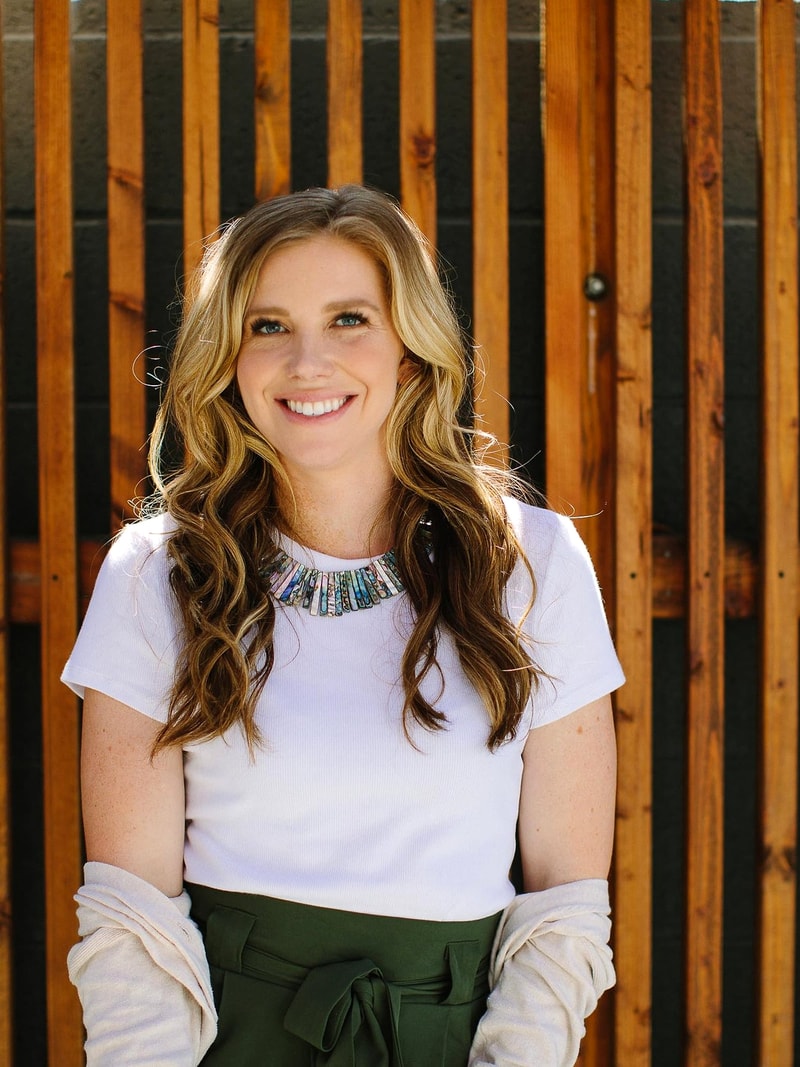
Christina Mathieson
Licensed Marriage and Family Therapist (LMFT) #115093
Human sexuality, couples work, ADHD and neurodiversity-affirming therapy, and affirming care for individuals navigating relationships, identity, and life transitions.

Michelle Cortez
Registered Associate Marriage and Family Therapist (AMFT) #146795
Supervised by Christina Mathieson, LMFT #115093
If therapy has felt too slow or too surface-level, that is exactly what I work against. Couples stuck in attachment patterns, anxiety and OCD, and neurodivergent clients who need structure and real feedback.

Angelique St. Jean
Registered Associate Marriage and Family Therapist (AMFT) #138223
Registered Associate Professional Clinical Counselor (APCC) #135549
Supervised by Christina Mathieson, LMFT #115093
Couples, families, and individuals navigating relationships, neurodivergence, infertility, trauma, and big life transitions. I bring a relational, strengths-based, family-systems lens, in English or Spanish.
FAQ
Common questions about couples therapy.
Do you work with same-sex and queer couples?
+
Yes, affirmingly. The work follows the same evidence-based frameworks as any couples therapy. We stay curious about the specifics of your structure and experience. There's a lot of variation within every relationship configuration.
What if my partner won't come?
+
You can still do meaningful relationship work in individual therapy. Many clients start there, shifting their own patterns, communicating more clearly, and often the partner joins later. Sometimes the work is about deciding whether to stay.
Do you work with non-monogamous and polyamorous partners?
+
Yes. Our approach is non-monogamy-affirming and kink-affirming. We work with structure, communication, and attachment across any configuration you're practicing, including ethical non-monogamy (ENM). Christina Mathieson, LMFT #115093, and Michelle Cortez, AMFT #146795 (supervised by Christina), both work extensively with ENM, polyamory, kink, and BDSM-affirming individual and couples care.
How long does couples therapy take?
+
Timelines vary by what's bringing you in. Recurring conflict cycles, affair recovery, sex and intimacy work, and rebuilding after years of distance all have different arcs. Some couples experience progress or relief in the first few sessions, often from the relief of finally getting help and beginning to take action together. Deeper, longer-term change typically unfolds over a few months of consistent work. If it ever feels like we're plateauing, we'll talk about it openly so we can adjust the approach.
We're already separated. Can couples therapy still help?
+
Yes, for many couples. The frame may shift depending on what you're trying to figure out. If you're separated and trying to decide whether to reconcile, [discernment counseling](/blog/discernment-counseling-when-one-partner-wants-out/) is often the right starting point, a short-term protocol designed for couples where the decision itself is the question. If you've decided to try to come back together, couples therapy can do the work of rebuilding. If you've decided to part well, particularly with children or a long shared life, couples therapy can sometimes serve as the structure for a clean separation.
How does couples therapy work if one of us has trauma history?
+
Trauma history changes the rhythm of couples work but doesn't change whether couples work is the right move. When one or both partners are carrying trauma, the nervous-system reactions inside fights are often louder and faster than they would be without that history, which can make ordinary couples-therapy interventions feel like they're missing the layer underneath. [Angelique St. Jean](/therapists/angelique-st-jean/), AMFT #138223 and APCC #135549 (supervised by Christina Mathieson, LMFT #115093), brings a systemic, family-systems lens to couples work and is often the right fit when trauma or a family transition is showing up in the relationship. In some cases, the trauma piece is addressed in individual therapy in parallel with the couples work; in others, it gets integrated directly into the couples sessions.
What's the difference between couples therapy and discernment counseling?
+
Couples therapy assumes both partners want to be there and want to work on the relationship. [Discernment counseling](/blog/discernment-counseling-when-one-partner-wants-out/), developed by Dr. William Doherty at the University of Minnesota, is a short-term protocol (typically 1 to 5 sessions) for mixed-agenda couples, one partner leaning toward separation, the other wanting to try. The goal of discernment counseling isn't to save the relationship; it's to help both partners get clearer about which of three paths fits: keep going as you are, separate or divorce, or commit to a six-month course of couples therapy with what's actually wrong on the table. If discernment counseling lands on the decision to do couples therapy, the work transitions there.
Who on the team does couples therapy?
+
Three of our clinicians work with couples, each with a distinct frame. Christina Mathieson, LMFT #115093, leads couples work with the Gottman Method (Level 2 trained) and integrates sex therapy where intimacy is part of the picture. Michelle Cortez, AMFT #146795 (supervised by Christina), works primarily through EFT-informed and attachment-based approaches, with strong experience in ENM, polyamory, and kink-affirming care. [Angelique St. Jean](/therapists/angelique-st-jean/), AMFT #138223 and APCC #135549 (supervised by Christina), brings a systemic, family-systems lens to couples work, particularly when the strain is tangled up with parenting, a family transition, or trauma surfacing in the relationship. Angelique also offers Saturday morning sessions, which can be a difference-maker for couples whose weekday schedules or childcare make weekly therapy hard to sustain.
Do you offer weekend couples therapy sessions?
+
Yes. [Angelique St. Jean](/therapists/angelique-st-jean/), AMFT #138223 and APCC #135549 (supervised by Christina Mathieson, LMFT #115093), offers Saturday morning appointments. Most evidence-based couples work assumes weekly sessions, so weekend availability matters when both partners have demanding weekday jobs, shift schedules, or childcare that makes a weekday slot unsustainable. Telehealth across California.
Do you offer couples therapy online in California?
+
Yes, our couples therapy is currently offered online. Sessions are held by secure video with partners anywhere in California from our Walnut Creek-based practice. Working online removes the commute that makes a weekly appointment hard to sustain, and we offer both weekday and weekend availability across the state.
References & further reading
- Gottman & Levenson (1992), Marital processes predictive of later dissolution: behavior, physiology, and health, Journal of Personality and Social Psychology, Peer-reviewed research
- Wiebe & Johnson (2016), A review of the research in Emotionally Focused Therapy for couples, Family Process, Peer-reviewed research
- Johnson, Makinen, & Millikin (2001), Attachment injuries in couple relationships: A new perspective on impasses in couples therapy, Journal of Marital and Family Therapy, Peer-reviewed research
- Doherty, Harris, & Wickel Didericksen (2016), Discernment Counseling for 'Mixed-Agenda' Couples, Journal of Marital and Family Therapy, Peer-reviewed research
- Nagoski (2015), Come As You Are — dual-control model of sexual response, Emily Nagoski, PhD
- Gottman Method, overview of four decades of research, The Gottman Institute
- International Centre for Excellence in Emotionally Focused Therapy, ICEEFT
- APA: Marriage and relationships research, American Psychological Association
- Brené Brown on Empathy (RSA Short), Brené Brown / RSA
- Brené Brown on Blame (RSA Short), Brené Brown / RSA
- ACT With Love by Russ Harris (ACT for couples), Russ Harris, MD
- Come Together by Emily Nagoski, PhD, Emily Nagoski, PhD
- The New Monogamy by Tammy Nelson, PhD (infidelity recovery), Tammy Nelson, PhD
- The Seven Principles for Making Marriage Work by John Gottman, PhD, John Gottman, PhD
- Hold Me Tight by Dr. Sue Johnson (EFT founder), Dr. Sue Johnson
- The Whole-Brain Child by Daniel J. Siegel, MD & Tina Payne Bryson, PhD (for parents), Daniel J. Siegel, MD & Tina Payne Bryson, PhD
- Fair Play by Eve Rodsky (domestic labor & partnership), Eve Rodsky
- Mating in Captivity by Esther Perel (desire in long-term relationships), Esther Perel
Last clinically reviewed: June 9, 2026 by Christina Mathieson, LMFT #115093.
Free monthly workshop
Borrowing Each Other's Calm: How Couples Steady the Nervous System
Friday, September 18, 2026 · 6:00 PM PT · Zoom · Free
Related
Sex Therapy
Comprehensive sex therapy for desire, pleasure, pain, disconnect, and everything we don't have good words for.
Learn moreEMDR Therapy
Structured bilateral stimulation therapy for processing trauma so it stops replaying in the background.
Learn moreIndividual Therapy
One-on-one therapy for anxiety, depression, identity, trauma, and the patterns you can see but can't yet shift.
Learn moreLGBTQ+ Affirmative Therapy
Affirming, identity-aware therapy for LGBTQ+ individuals and couples, including non-monogamy and kink-aware work.
Learn moreReady to talk it through?
Free 15-minute call. We'll figure out if couples therapy is the right work for where you are, and match you with the right person on our team.
Book a Free Consult