
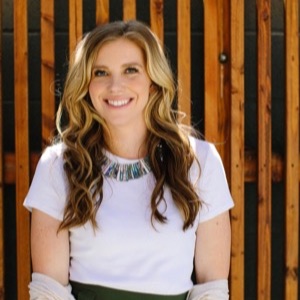
By Christina Mathieson, LMFT #115093, founder of My Mental Climb.
TL;DR. Trauma from a medical event (a frightening birth, a diagnosis, an ICU stay, a pregnancy loss) is trauma, and most trauma content misses it because it defaults to trauma-from-violence. It also affects the partner who watched. About 7% of partners meet criteria for post-traumatic stress a month after an early pregnancy loss, and fathers and non-birthing partners develop birth-related PTSD too. Trauma-focused CBT is one of the first-line PTSD treatments recommended by the APA; ACT takes on the identity questions a diagnosis raises, and systemic family work addresses what the event did to the household. Angelique St. Jean, AMFT #138223 and APCC #135549 (supervised by Christina Mathieson, LMFT #115093), leads this work on our team.
There are two people in most of these stories. One is on the table, or in the bed, or holding the results. The other is in the chair beside them, or in the hallway, or on the phone in a parking lot being told something they cannot do anything about. Trauma content almost always writes about the first person. This post is also about the second one.
Medical trauma is one of the most common kinds of trauma and one of the least recognized. When people picture trauma they picture violence: an assault, a crash, combat. A hospital is supposed to be where you go for help, so the fear that happens there gets filed as a hard experience you were lucky to get through, rather than as something the nervous system logged as a threat to survival. It logs it anyway.
What counts as medical trauma
Medical trauma is a traumatic stress response to a medical event. The event can be sudden or slow, and it can happen to your body or in front of you. A few of the common forms:
A frightening birth. Depending on the study, somewhere between 9% and 50% of mothers describe their birth as traumatic, and roughly 3 to 6% go on to develop childbirth-related PTSD, along with about 1.2% of fathers, according to a review in the American Journal of Obstetrics & Gynecology. An emergency cesarean, a hemorrhage, a baby who needed resuscitation, a long stretch where no one would tell you if everyone was going to be okay: any of these can leave a traumatic imprint that outlasts the recovery.
A serious diagnosis. Cancer, a cardiac event, a chronic illness, a neurological condition. The appointment itself is often the traumatic moment, the specific room and the specific sentence, and it comes back later with the force it had the first time.
Procedures and hospital stays. Time in an ICU, an intubation, a NICU stay with your newborn, a surgery that went differently than planned. Medical procedures can be experienced as helplessness and threat even when they were medically routine and the outcome was good.
Pregnancy loss and fertility treatment. Miscarriage, ectopic pregnancy, stillbirth, and the invasive machinery of IVF each carry their own trauma load. We wrote about the grief side of this in Infertility Grief: The Losses Nobody Sends Cards For; the trauma side is its own layer on top of the grief.
What connects them is not the diagnosis code but the fact that the event overwhelmed your sense of safety faster than you could process it, leaving some part of your system still braced for it to happen again.
Why medical trauma gets missed
Medical trauma hides for a few specific reasons.
The setting argues against it. You were surrounded by professionals who were trying to help, so it feels ungrateful or irrational to say the experience frightened you at a level you are still carrying. The outcome often argues against it too. When the baby is healthy or the surgery worked, the story becomes a happy ending, and the fear you went through in the middle gets no place to land.
There is also the language problem. Medical events come wrapped in statistics and clinical terms, and that framing can make your own reaction feel out of proportion. A 2% complication rate is reassuring on paper and does nothing for a body that spent an hour certain it was in the 2%.
The partner in the waiting room
The partner's side of this is the part that most often goes without support. I came to that understanding honestly: my own husband was the one who first pointed out to me, after the birth of our child, how differently the person watching carries it, and how rarely anyone thinks to check on them. He was right, and it changed how I listen for it in the room. When a medical crisis happens to one person, the people closest to them go through their own version of it, and that version can be traumatic in its own right. Clinicians call it secondary or witness trauma: a traumatic stress response to watching someone you love be in danger while you can do nothing that changes the outcome.
The partner who watched a birth turn into an emergency is often left with a sharper memory of it than the person who gave birth, because the birthing parent may have been medicated, dissociated, or focused entirely on getting through it, while the partner stood there fully alert with nothing to do but watch. Fathers and non-birthing partners develop birth-related PTSD after a traumatic delivery, and researchers have built a validated scale specifically to measure it in partners, which tells you how overlooked it has been.
Pregnancy loss follows the same pattern. A study led by Imperial College London found that 7% of partners met criteria for post-traumatic stress one month after an early pregnancy loss, rising to 8% at three months, with 4% still meeting criteria nine months out. Partners grieve the loss and often shoulder the added weight of having been assigned the role of the strong one, the one who holds it together, makes the calls, and asks how she is doing without anyone asking how they are.
Fertility treatment stretches this over months and years. The partner is frequently the one giving the injections, tracking the schedule, sitting through the two-week waits, and watching the person they love hand their body over to a process that hurts and disappoints on a cycle. The constant is helplessness: being close enough to see all of it and unable to make any of it go faster or hurt less.
Two things keep partners from getting help. The first is the belief that it was not their trauma to claim, that their job is to support and not to need support. The second is that no one offers, because the medical system and the people around the couple orient entirely toward the patient. So the partner's stress goes underground and tends to surface later as irritability, withdrawal, trouble sleeping, or a distance in the relationship that neither person connects back to the event.
When the diagnosis reorganizes the family
A serious diagnosis can reorganize a whole household in an afternoon. A cancer diagnosis, a parent's dementia, a child's serious illness: plans that no longer apply, roles that shift, each person absorbing the news at a different speed. For the family, that adjustment can itself be traumatic, and it deserves support of its own.
Neurodevelopmental diagnoses like autism and ADHD belong in a different frame, and it matters that we keep them there. Autism and ADHD are not illnesses or injuries, and the diagnosis is not a trauma the person inflicts on anyone. For the person diagnosed, it is far more often a relief: a name for something that was always there, and the end of years of being told to try harder. Where distress shows up for them, it usually traces back to the time before the name, and to a world that was not built for how they think, not to the neurotype itself.
Some parents struggle with this, and saying so does not make the child a burden. Caregivers often grieve a set of assumptions they did not know they were holding: the way they pictured things going, the timeline they expected, the support they now have to go find. Many also carry guilt for not seeing it sooner, for the years they read a struggle as defiance or laziness and pushed harder. At the time, they were working from the only frame they had, measuring their child against a standard no one had told them might not fit, with nothing available to make the behavior legible as neurodivergence. That guilt makes sense, and it often eases once those years get re-read as what they were: a child who was up against something they could not help, not a child who was not trying. The grief and the guilt are about the parent's expectations and a system that offers families too little, not about the worth of the child. Angelique's doctoral work at Loma Linda University focuses on exactly this, how families steady themselves systemically around a new or unexpected diagnosis, so the re-orienting work sits with the adults and the systems around the person, and the diagnosis can be, for the person, what it usually is: information that finally explains them to themselves.
The person diagnosed and the people around them often meet the same news from different places, one relieved, one grieving, and they rarely compare notes. Doing that out loud, with someone to guide it, is often what keeps the difference from turning into distance.
What helps
Treatment for medical trauma uses the same evidence-based approaches as any other trauma, matched to who is in the room.
For the traumatic memory itself. Trauma-focused CBT is one of the first-line treatments recommended by the APA Clinical Practice Guideline for PTSD, alongside cognitive processing therapy and prolonged exposure. It works with the specific memory that keeps intruding, the hospital room or the phone call or the moment on the table, and with the beliefs that formed around it: that your body failed, that you should have done something differently, that the danger is still nearby. Our post on what trauma-focused CBT is and who it helps walks through how it works.
For the identity and meaning questions. A diagnosis or a loss raises questions that are not really about symptoms: who am I now, what do I want the rest of this to look like, how do I live alongside something I cannot undo. Acceptance and commitment therapy is built for that territory, using values work to help you move toward what matters while carrying what happened rather than waiting for it to disappear first.
For the couple and the family. Systemic family work makes visible what the event did to the relationships around it, the different tempos of grief, the partner whose trauma went unacknowledged, the way a household reorganizes around a diagnosis. Working with both people, rather than only the identified patient, is often what keeps a medical trauma from settling into the marriage unnoticed.
When to consider therapy
A few signals from the room.
If a specific medical memory keeps coming back with the same intensity it had when it happened, or if you avoid the reminders of it (the hospital, the anniversary, the smell of the place, medical appointments in general), that is the memory still being unprocessed rather than filed.
If you were the partner or the parent watching, and you have been telling yourself it was not your trauma to have, notice whether you are sleeping, whether you have gone distant, whether you are more on edge than the situation now calls for. Witness trauma answers to treatment the same way direct trauma does, and it does not require you to have been the patient.
If a diagnosis in your family has left everyone coping at a different speed and the household feels like it is straining at the seams, that is a systemic load to bring in, not a sign anyone is failing at it.
If any of that fits, a free 15-minute consult with our intake coordinator is a low-pressure place to start.
About our work here
At My Mental Climb, medical trauma, birth trauma, reproductive loss, and family-diagnosis work are led by Angelique St. Jean, AMFT #138223 and APCC #135549 (supervised by Christina Mathieson, LMFT #115093). Angelique brings a systemic, family-systems and trauma-focused lens: trauma-focused CBT for the events themselves, ACT for the identity and values questions, and systemic family therapy for how the event is reshaping partnership and family. She works with the patient, the partner, or both, and sees clients in English and Spanish.
I am Christina Mathieson, LMFT #115093, founder of My Mental Climb. We are a Walnut Creek-based practice offering California telehealth. Whether you went through the medical event or watched someone you love go through it, we would be glad to talk through fit with you.
Related on this site: Trauma therapy · What Is Trauma-Focused CBT, and Who Does It Help? · Infertility Grief: The Losses Nobody Sends Cards For · Matrescence: The Word for What's Happening When You Become a Mother
Further reading: APA Clinical Practice Guideline for PTSD · Imperial College London: post-traumatic stress in partners after pregnancy loss · Postpartum Support International
Common questions
- What is medical trauma?
- Medical trauma is a traumatic stress response to a medical event: a frightening birth, a serious diagnosis, an ICU or NICU stay, an invasive procedure, or the moment a scan or a phone call changed everything. It meets the same criteria as any other trauma. The event overwhelmed the nervous system's sense of safety, and the memory of it keeps intruding, gets avoided, or keeps the body on alert long after the medical situation resolved. It is common and frequently missed, because a hospital is supposed to be a place of help, so the fear that happened there rarely gets treated as trauma.
- Can a partner be traumatized by a birth or pregnancy loss even though it did not happen to their body?
- Yes. Watching someone you love go through a frightening birth, a miscarriage, or fertility treatment can produce traumatic stress in the partner, sometimes called secondary or witness trauma. Research at Imperial College London found that 7% of partners met criteria for post-traumatic stress one month after an early pregnancy loss, and 4% still did nine months later. Fathers and non-birthing partners also develop birth-related PTSD after a traumatic delivery. That distress tends to go unaddressed, because everyone, including the partner, treats it as not their turn.
- Can a diagnosis be a traumatic event?
- Yes, a serious illness diagnosis can. A cancer, chronic-illness, or neurological diagnosis can function as a traumatic event, not only a piece of hard news: the appointment where you heard it, the words the doctor used, and the future that rearranged itself in the next few seconds can lodge in memory the way any trauma does. Neurodevelopmental diagnoses like autism and ADHD sit in a different frame. They are not illnesses, and for the person diagnosed the diagnosis is usually a relief rather than a trauma. What can be hard there is the family's adjustment, including a parent's grief or guilt for not seeing it sooner, which is about expectations and support, not about the worth of the person diagnosed.
- How is medical trauma treated?
- Medical trauma is treated with the same evidence-based trauma approaches used for other traumatic events. Trauma-focused CBT is one of the first-line treatments recommended by the American Psychological Association for PTSD, and it works with the memory of the medical event and the beliefs that formed around it. Acceptance and commitment therapy helps with the identity and values questions a diagnosis or loss raises, and systemic family work addresses how the event has reshaped a couple or a household. The right mix depends on whether we are working with the person who went through it, the partner who witnessed it, or both.
- Who at My Mental Climb works with medical and birth trauma?
- Angelique St. Jean, AMFT #138223 and APCC #135549 (supervised by Christina Mathieson, LMFT #115093), leads our work with medical trauma, birth trauma, reproductive loss, and families adjusting to a diagnosis. She uses trauma-focused CBT for the events themselves and systemic family therapy for how the event is reshaping partnership and family. Sessions are available in English and Spanish across California.
Tagged
Last clinically reviewed: by Christina Mathieson, LMFT #115093.