
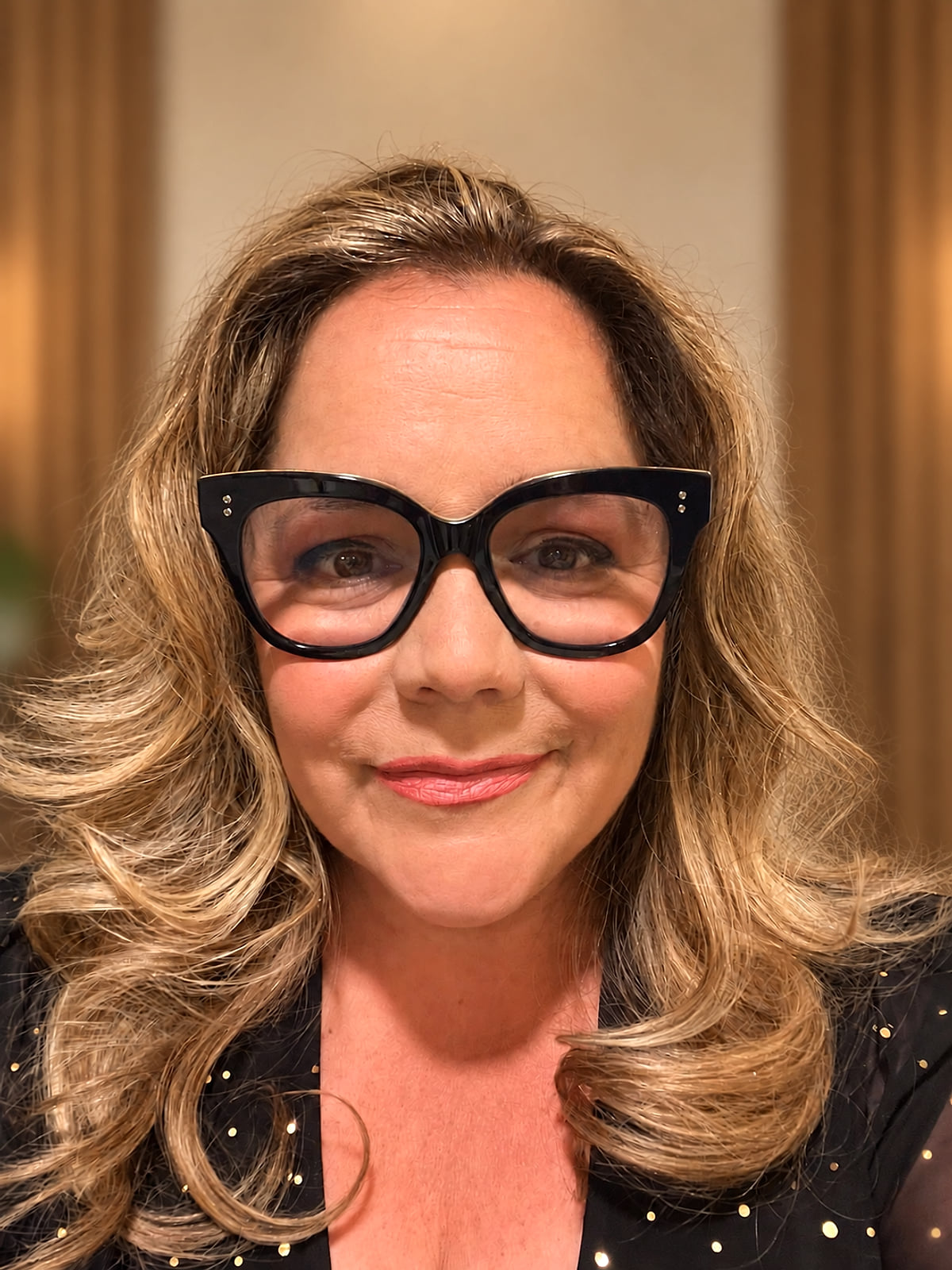
AMFT, APCC
Angelique St. Jean
Registered Associate Marriage and Family Therapist & Professional Clinical Counselor
Registered Associate Marriage and Family Therapist (AMFT) #138223
Registered Associate Professional Clinical Counselor (APCC) #13549
Supervised by Christina Mathieson, LMFT #115093
Couples, families, and individuals navigating relationships, neurodivergence, infertility, trauma, and major life transitions like separation and co-parenting. I bring a relational, strengths-based, family-systems lens, in English or Spanish.
A free 15 minutes phone call with our intake coordinator, who gets you matched — with Angelique or whoever on our team fits best.
Private pay, with out-of-network and sliding-scale options. See how billing works.
Who I work with
I'm Angelique St. Jean, AMFT #138223 and APCC #13549, supervised by Christina Mathieson, LMFT #115093. I work with individuals, couples, and families navigating relationships, major life transitions, trauma, parenting challenges, infertility, and neurodivergence. I come to this with a background in both business and clinical psychology, so I tend to be practical and systemic. None of us struggles in isolation, so I look at how your relationships, family, history, culture, and environment shape the way you understand yourself and connect with others. I work with clients from a range of culturally diverse backgrounds, and I stay curious about how your particular culture and community shape what you bring in rather than assuming I already know.
Much of my work is with couples caught in communication breakdowns, disconnection, conflict, trust concerns, and major transitions, including separation and divorce.
When a relationship is ending, I help parents build a working co-parenting relationship, so the logistics of scheduling, handoffs, and money stop turning into the same fight and the conflict between the two of you lands less on the kids. More on divorce and co-parenting →
I also support individuals and couples through infertility, fertility treatment, pregnancy-related stress, and reproductive grief, and the way those experiences reshape identity, intimacy, and the whole family system. See more on our women's therapy page →
I specialize in helping parents and families navigating ADHD, autism, and neurodivergence, including the emotional weight an unexpected diagnosis or a shifting family dynamic can put on everyone involved. My doctoral work at Loma Linda University focuses on systemic approaches to supporting families around autism and other exceptional diagnoses. See more on our ADHD and neurodiversity-affirming page →
I'm especially drawn to clients who have spent years taking care of everyone else and are just now asking, "What do I want my life to look like from here?" Therapy with me is often about healing what happened and deciding, on purpose, what comes next. My style is grounded and pragmatic: this is a space where you can speak openly without judgment, and also learn practical tools to communicate better, set boundaries that have been blurry for years, regulate emotions, and interrupt patterns that stopped working a long time ago. I also work with addiction and recovery, both with people examining their own substance use and with the partners and family members living in its wake. I draw on family-systems and recovery-informed approaches to work with the codependency, blurred boundaries, and exhaustion that addiction creates across a household.
Sessions are available in English and Spanish.
My approach
My clinical style is relational, trauma-informed, strengths-based, and family-systems oriented. I look beyond a single symptom to how your relationships, developmental stage, family patterns, environment, health experiences, and life circumstances interact with what brought you in, because that is usually where patterns start and where they can change. With couples and families, I work with the actual patterns in the room: who pursues, who withdraws, what goes unsaid, and what keeps the same fight on repeat.
Alongside that, I use trauma-focused CBT for the experiences that still feel heavy in the present, and I teach concrete skills for communication, boundaries, and emotion regulation so change shows up in your real life and not just in session. My work is neurodiversity-affirming. For families adjusting to an autism or ADHD diagnosis, I help the whole system understand what is happening and respond in a way that fits how each person is actually wired.
What I want you to know: meaningful change tends to happen when people feel genuinely understood and are also challenged to see their patterns differently. I hold both.
Specialties
- ·Couples Therapy
- ·Separation, Divorce & Co-Parenting
- ·Family Systems & Parenting
- ·Autism & Neurodiversity-Affirming Care
- ·Infertility & Reproductive Grief
- ·Trauma-Focused Therapy
- ·Addiction, Recovery & Codependency
- ·Life Transitions & Reinvention
Modalities
- ·Trauma-Focused CBT
- ·Family Systems Therapy
- ·Systemic Therapy
- ·Cognitive Behavioral Therapy (CBT)
- ·Emotion Regulation Skills
- ·Boundary & Communication Work
Education
- MBA
- MA in Clinical Psychology
- Doctoral student in Marriage and Family Therapy, Loma Linda University (systemic approaches to families navigating autism and other exceptional diagnoses)
Verify & credentialing bodies
- Verify Angelique St. Jean's California license on the Department of Consumer Affairs license search, California Board of Behavioral Sciences
Recent writing
From Angelique's notebook.
ADHD and Autism Partner Burnout: Signs and What Helps
Loving a partner with ADHD or autism can leave you exhausted, lonely, and resentful, and your partner may be worn out too. Two therapists on the signs of partner burnout, what is often happening on each side, and what helps.
Should We Stay Together for the Kids? How to Think It Through
What matters most for kids is not whether their parents stay married but how much conflict they grow up around. Two therapists on how to think through the stay-or-go decision, and what protects children either way.
What Is Executive Dysfunction? The Skills It Affects and Tools for Each
Executive dysfunction is when the brain's management system falters, so you know what to do but can't reliably start or finish it. A family therapist on the skills it affects, practical tools for each, and why it so often shows up alongside ADHD and autism.
What Is Codependency? The Signs and How to Start Changing It
Codependency is a pattern where your sense of being okay depends on managing someone else's feelings, choices, or addiction. A family therapist on what it looks like, where it comes from, and how to start changing it.
Work with Angelique.
Free 15 minutes consultation with our intake coordinator. No commitment, no pressure. We'll talk about what you're working on and match you with the clinician on our team whose training fits best.
Book a Free Consult