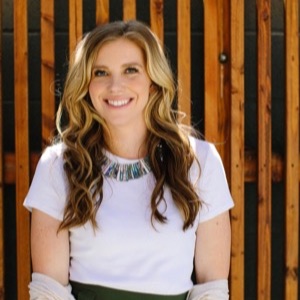
By Christina Mathieson, LMFT #115093, founder of My Mental Climb.
TL;DR. Sliding scale therapy means a clinician offers a small number of session slots at reduced fees, usually structured by household income tier rather than as an open negotiation. At California private practices, most sliding-scale slots sit between $100 and $160 per session, with training clinics and community settings filling the lower tiers, and most practices keep only a handful of reduced-fee slots at any given time. Asking is more straightforward once you know how the structure works, and it usually comes down to a few sentences and a direct request.
If you have ever scrolled a therapist's website hoping to spot the words "sliding scale," then closed the tab when you did not find them, this post is for you. Sliding scale exists in California in more places than people realize. It also gets misunderstood in ways that make people give up on therapy before they have asked.
This is a clinician's guide to what sliding scale is, what to expect at different income levels, and what to say when you reach out.
Sliding scale is not a discount
The most common misunderstanding is that sliding scale means you negotiate the price down because regular therapy is too expensive. That framing makes the conversation feel like haggling, which makes people not ask.
What sliding scale actually is, in most California practices that offer it: a small number of session slots reserved at reduced fees, structured by household income tier. The therapist sets the tiers in advance, you self-disclose your income bracket, and you either qualify for a tier or you do not. The price is set; you are not negotiating.
The reduced-fee slots exist for clinical and ethical reasons that most therapists believe in. Many of us took on student debt specifically to do this work, and a piece of how we pay back that ethical debt is by keeping a few seats open for clients who could not otherwise afford care. Some practices structure this formally with a written sliding scale policy; others handle it case by case. Either way, it is a real piece of how California private-practice therapy gets funded.
Why some practices offer it and some do not
Whether a practice offers sliding scale depends on a few real factors:
- Caseload structure: practices with a full-fee waitlist often keep more sliding-scale slots open because the rest of the practice is covering overhead.
- Stage of career: associate therapists (AMFT, APCC, ASW) and recently licensed clinicians typically have more sliding-scale availability than mid-career or specialty-trained clinicians who are at capacity.
- Mission alignment: some practices were founded with explicit access goals (often around BIPOC clients, queer clients, low-income clients) and structure their fees around that.
- Training-clinic affiliation: postgraduate training clinics across California offer sliding scale as the standard, often with fees as low as $20 to $80 per session, with the clinician supervised by a licensed therapist.
Practices that do not offer sliding scale are not being unfair. Many full-fee specialty practices have their own structure: they keep all slots at the standard rate so they can refer clients who need lower fees to the right place rather than under-resource their own time. A "we do not offer sliding scale" answer is often paired with a referral to someone who does.
What sliding-scale ranges look like across California
Reduced fees track the setting and the clinician's level of experience more than your income. As a general picture of the California market, not a quote from any one practice:
- Postgraduate training clinics and community mental health settings: roughly $20 to $80 per session, and sometimes free with the right insurance. The clinician is a supervised trainee.
- Associate and pre-licensed clinicians (AMFT, APCC, ASW): usually the most sliding-scale availability, with reduced-fee slots that tend to start around $100, depending on the practice.
- Licensed private practice: fewer reduced-fee slots, and they sit above the associate tiers.
- Specialty practices (couples therapy, sex therapy, EMDR-trained clinicians): the least sliding-scale availability, because demand outstrips supply at every fee level, and reduced fees sit at the higher end.
Every practice sets its own tiers, so these ranges are general orientation rather than anyone's posted rate. The only way to learn a specific clinician's reduced fee is to ask.
How to ask
Keep the ask direct, short, and structurally aware. Something like this in an initial email or consult call:
"I am interested in working with you. I want to be upfront that my household income is around $X, and I am looking for either sliding scale or out-of-network reimbursement options. If you do not have sliding-scale availability right now, I would appreciate a referral to someone who does."
What that phrasing is doing: it gives the therapist the information they need to answer in one reply, it keeps them from having to ask follow-ups, and it leaves an out (a referral) that does not feel like rejection on either side.
What tends to create friction: vague "do you take insurance?" questions when you actually mean "I can't afford full fee," or starting therapy at full fee and then asking for a discount three months in. The first creates confusion, and the second forces a renegotiation the clinician has limited room to honor.
What to do if your fit therapist does not offer sliding scale
This is where most clients give up too early. A clinician who does not have a sliding-scale slot still has three other levers they can offer:
- A superbill is a receipt with the diagnosis code and CPT code, formatted so you can submit it to your PPO insurance for out-of-network reimbursement. Depending on your plan, you may get back 40 to 80 percent of the session fee after your out-of-network deductible. Many California therapists provide superbills routinely. See our broader cost-of-therapy guide for the math on how this works in practice.
- Frequency adjustment: some therapists are open to a biweekly or monthly cadence after the acute phase of work, which effectively halves or quarters the monthly cost without changing the per-session rate.
- A referral to a sliding-scale clinician in their network: most therapists know who in their region has open lower-fee slots, and the referral is usually a single email that gets you on a shorter waitlist.
If you are looking specifically in California, our page on how much therapy costs in California covers the per-session ranges by clinician type, and does insurance cover therapy in California walks through the parity law and the most-common plans (Lyra, Mentaya, Kaiser, PPO networks).
When sliding scale is not the right path
Sliding scale is the right structure for ongoing weekly therapy at a reduced rate. It is not designed for:
- One-session crisis intervention: most sliding-scale slots are committed to ongoing clients. For an acute crisis, call 988 or go to an emergency department.
- High-acuity treatment that needs more than weekly contact: intensive outpatient programs (IOPs) and partial hospitalization programs (PHPs) are funded differently and structured around clinical acuity, not fee tier.
- A free or near-free session count: most sliding-scale arrangements still require payment at the agreed reduced rate. If full-cost-free is what you need, community mental health centers and county-funded programs are the right starting point.
What we offer
At My Mental Climb, our team works exclusively via telehealth across California. We have sliding-scale availability at limited tiers; our reduced-fee rates do not go below $100, and most sit at $120 and up, depending on the clinician and the tier. We issue superbills routinely, and for clients who would rather not deal with insurance paperwork, we partner with Mentaya: on our billing and insurance page you can use their free benefits checker to see your estimated out-of-network reimbursement in real time, and for a small per-claim fee Mentaya submits your claims and handles the follow-up for you. If you want to talk through what would work for your situation, our intake coordinator handles fee conversations on the free 15-minute consult without you needing to commit to a session first.
Sliding scale exists for a reason, and asking for it is a routine conversation. Most California therapists who offer it want the slots filled by people who need them, and the language above is meant to make that conversation more straightforward.
Related from My Mental Climb: ChatGPT Isn't Your Therapist · Breaking the Stigma: How Therapy Empowers Your Mental Climb · Why Therapy Didn't Work Last Time
Common questions
- What is sliding scale therapy?
- Sliding scale therapy means a clinician offers a small number of session slots at reduced fees, usually structured by household income tier rather than as an open negotiation. The therapist sets the tiers in advance, you self-disclose your income bracket, and you either qualify for a tier or you do not. It is not a discount you haggle for, because the price is already set.
- How much does sliding scale therapy cost in California?
- At California private practices, most sliding-scale slots sit between $100 and $160 per session, with training clinics and community settings filling the lower tiers. Postgraduate training clinics and community mental health settings run roughly $20 to $80 per session with a supervised trainee, while associate and licensed private-practice fees sit higher. Every practice sets its own tiers, so the only way to learn a specific fee is to ask.
- How do I ask a therapist for sliding scale?
- Keep the ask direct and short, stating your household income and that you are looking for sliding scale or out-of-network reimbursement options, and ask for a referral if they have no availability. This gives the therapist what they need to answer in one reply and leaves an out that does not feel like rejection on either side. Avoid vague insurance questions or starting at full fee and asking for a discount months later.
Tagged
Last clinically reviewed: by Christina Mathieson, LMFT #115093.