
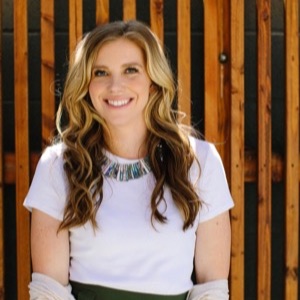
Over the last few years, a particular kind of client has become more and more common in our practice. Adults, often in their thirties or forties, who have spent their whole lives being told they are too sensitive, too intense, or too much, and who are starting to wonder whether the real explanation is that they are autistic. Many have gotten very good at passing, and they are worn out from it. This is an area I have deliberately built out at My Mental Climb by bringing on Angelique St. Jean, AMFT #138223 and APCC #135549, an associate I supervise whose focus is exactly this work.
Here is the first thing Angelique and I want you to know. Autism therapy, the way we practice it, is not about making an autistic person less autistic, and it is not a treatment meant to fix or cure who someone is. Autism is a difference in how a brain is wired, not a flaw in character or a failure of effort. What therapy helps with is everything that tends to pile up around being autistic in a world built for a different kind of brain: exhaustion, anxiety, self-doubt, relationships that keep misfiring, and the grief that can come with a late diagnosis.
How autism can show up in relationships
Autistic adults often describe the same handful of experiences in their closest relationships. If several of these ring true, it can be worth exploring, whether or not you have a formal diagnosis.
- Needing things direct. Hints, subtext, and "you should just know" can be genuinely hard to read, and guessing wrong gets taken as not caring.
- Sensory overload in the middle of connection. Noise, bright light, a crowded restaurant, or a certain texture can make it almost impossible to stay present with a partner.
- Shutdowns or meltdowns after holding it together all day. What looks like withdrawal or a sudden flood is often a nervous system that has simply run out of room.
- Trouble putting words to feelings in the moment. Studies find that many autistic people also experience alexithymia, a difficulty identifying and describing emotions. From the outside it can read as coldness when it is closer to a translation problem.
- Deep focus that is hard to break. When attention is fully absorbed in something, switching to a partner's bid on the spot can feel jarring, and a partner can misread it as disinterest.
- A sense that the misunderstanding goes both ways. Researchers call this the double empathy problem: autistic and non-autistic people often have trouble reading each other, so the mismatch is mutual rather than a one-sided deficit in you.
"Wait… am I autistic?"
If you've found yourself wondering whether you might be autistic, you're in good company, especially as an adult, and especially if you're a woman or were raised as one. A formal diagnosis comes from a specialized evaluation, and no article or online quiz can give you that. What honest self-reflection can do is help you decide whether the question is worth taking further.
Many autistic adults say they relate to some version of these:
- Feeling a half-step out of sync socially for as long as you can remember, and coping by studying and copying other people
- Needing recovery time alone after socializing, not as a preference but as a requirement
- Sounds, lights, textures, or foods affecting you far more than the people around you seem to understand
- Intense, sustained interests that are a genuine source of joy and steadiness
- Change and unstructured plans costing you more than they seem to cost others
- Being called "too much," "too sensitive," or "too blunt" your whole life
None of these on its own means you're autistic, and several overlap with ADHD, anxiety, or trauma. Seeing yourself in a lot of them can still be a meaningful signal. Some people find a validated screener like the AQ or the RAADS-R a helpful way to organize their thinking, as long as you hold it as a starting point rather than an answer. Self-identifying is valid too, and it's often where the whole process begins.
We don't provide formal autism assessments ourselves, but therapy with Angelique can be a place to explore whether this fits you, make sense of a recent realization, and figure out your next step. If a formal evaluation would help, she can talk it through and point you toward providers who do them.
The struggles it helps with
- Autistic burnout and the cost of masking all day, every day.
- Anxiety, and the exhaustion of constantly decoding social situations that others seem to run on autopilot.
- Self-worth after years of feedback that you were too much, or not enough.
- Late-diagnosis grief, and the slow, often relieving process of rereading your own history through a truer lens.
- Home and family life, including parenting, and the wish to be understood by the people closest to you.
What therapy involves
Angelique tailors this to the person, but her sessions often include:
- Sorting out masking. Where it protects you, where it costs you, and how to let it down in the places that are safe.
- Budgeting energy and sensory load. Building a schedule with enough recovery in it, instead of pushing until you crash.
- Building emotional vocabulary and interoception. Getting better at reading what your body is signaling, and putting words to it before it becomes a shutdown.
- Concrete communication tools. Direct requests and simple scripts, so connection stops depending on anyone reading minds.
- Changing the environment, not just tolerating it. Accommodations at home and work count as skill, not as giving up.
- For couples and families, translating between different kinds of wiring so both people feel understood rather than blamed.
Underneath a lot of this is a shift in how you relate to your own brain. Many autistic people run on what researchers call monotropism, a tendency to pour attention deeply into one channel at a time. Once that is understood as a feature rather than a failing, a lot of self-criticism starts to ease, and it gets easier to design a life that works with your attention instead of against it.
Who you'd be working with
Angelique St. Jean is a Registered Associate Marriage and Family Therapist and Professional Clinical Counselor (AMFT #138223, APCC #135549), and she is completing doctoral work at Loma Linda University on systemic approaches to families navigating autism and other diagnoses. She came to therapy from a background in both business and clinical psychology, which shows up as a grounded, practical style. She works with individuals, couples, and families, and her approach is neurodiversity-affirming from the ground up. She is supervised by me, Christina Mathieson, LMFT #115093.
If past therapy didn't get it
A lot of autistic adults come to us after therapy that missed the mark, where they spent whole sessions explaining their own brain to someone, or felt like the unspoken goal was to help them act more "normal." If that has been your experience, this is a different starting point: the aim here is to help you build a life and relationships that fit how you are wired. Angelique works in English and Spanish, and she stays curious about how your particular culture, family, and community shape what a diagnosis means for you, rather than assuming she already knows.
Common questions
Can therapy help an autistic adult?
Yes. Therapy won't change the fact that you're autistic, but it can ease the burnout, anxiety, and relationship strain that often come with being autistic in a world built for a different kind of brain.
Do I need a formal autism diagnosis to start?
No. You're welcome whether you're formally diagnosed, self-identified, or still figuring it out.
Do you diagnose autism?
No, we don't provide formal autism assessments. We can help you think through whether pursuing one makes sense and point you toward providers who do them.
Is this ABA?
No. ABA is a behavior-based approach used mostly with autistic children. Our work with adults is neurodiversity-affirming and focused on support, self-understanding, and relationships, not on training you to behave differently.
If you saw yourself here
You don't have to sort this out alone. A free 15-minute consult with our intake coordinator is the next step, and they can get you set up with Angelique and answer any questions about fit. Our practice is based in Walnut Creek, with secure telehealth across California, in English or Spanish.
Christina Mathieson, LMFT #115093, is the founder of My Mental Climb. She supervises Angelique St. Jean, AMFT #138223 and APCC #135549.
Tagged
Last clinically reviewed: by Christina Mathieson, LMFT #115093.